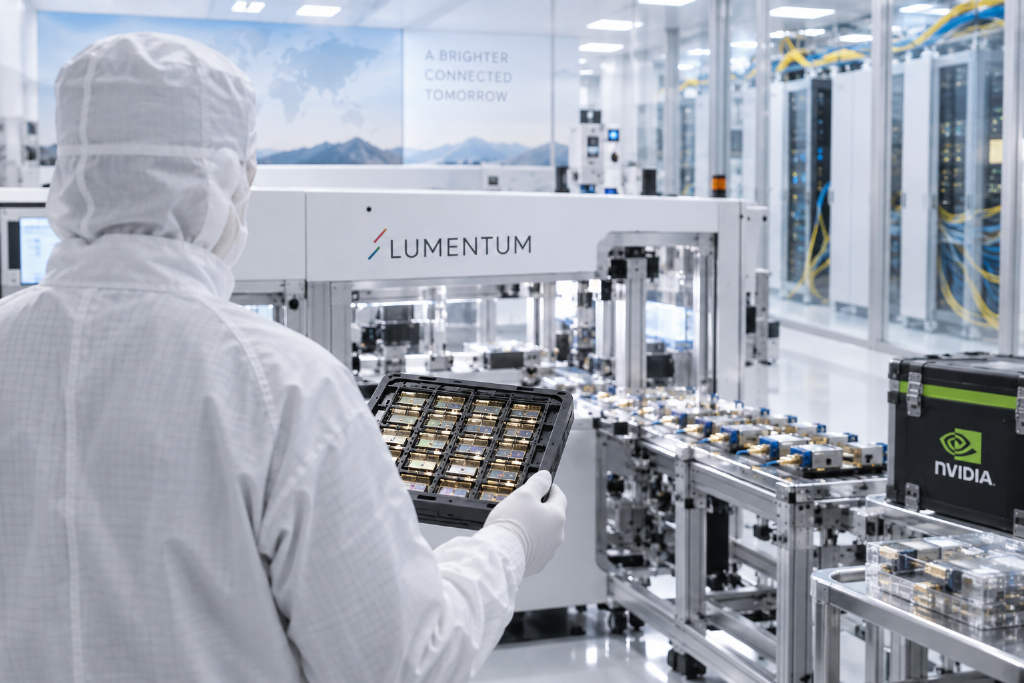
Lumentum2026-10-09 01:02:42Lumentum says photonics capacity is nearly sold out, with tight supply seen lasting until 2029Lumentum said demand for its photonic components has surged as technology companies race to build faster AI data centers, leaving the company’s production capacity almost fully booked through around 2029. Earlier this year, Nvidia invested $2 billion in the company. Lumentum is a key supplier of advanced indium phosphide devices used to support high-speed cloud computing and data transmission. Chief Executive Officer Michael Hurlston said the company expects to be unable to meet about 70% of product demand next year, with roughly 30% of demand still going unmet through 2028. Hurlston had previously said the company was on track to have its capacity sold out before 2028. He said Lumentum is moving as quickly as possible to expand output, but demand from customers remains far ahead of what the company can supply, and there is no near-term end in sight to the capacity crunch.20
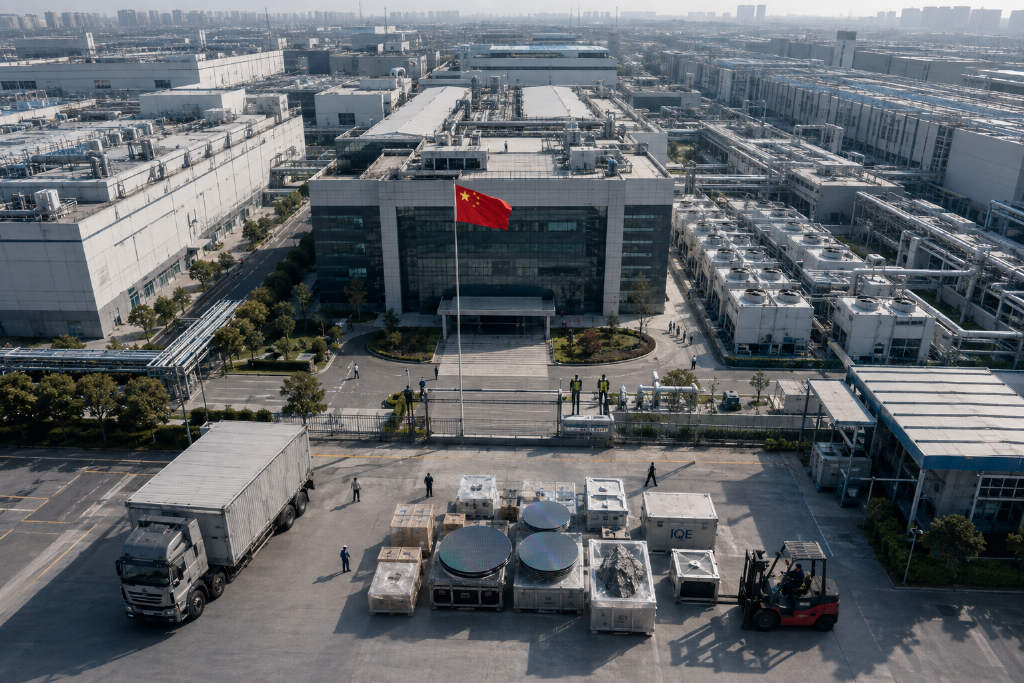
IQE2026-09-07 12:18:42IQE CEO Warns China's Indium Phosphide Export Controls Threaten AI Infrastructure PlansIQE's CEO has warned that China's export controls on indium phosphide threaten the global semiconductor supply chain and could delay AI infrastructure expansion. Indium phosphide is a critical material for advanced semiconductor manufacturing.1050
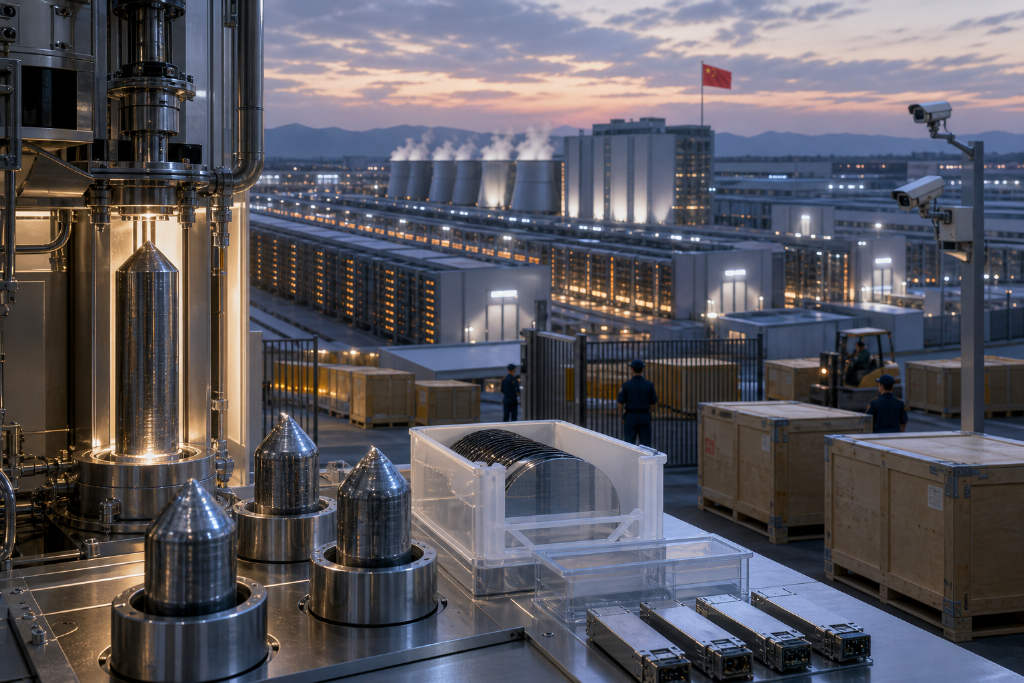
Indium Phosph2026-08-19 23:03:10China’s grip on indium phosphide is tightening pressure on the CPO supply chainIndium phosphide has moved to the center of the optical supply chain as AI data center buildouts drive demand for high-speed optical modules and co-packaged optics, or CPO. The article argues that China now holds critical leverage across all three major steps of the indium phosphide chain: primary indium smelting, indium refining, and wafer manufacturing. That position has become more consequential after Beijing expanded export controls from indium phosphide products to upstream indium itself. The report details how pressure is building across the industry. Lumentum’s CEO said earlier this month that the shortage in indium phosphide is even more severe than in memory, while Nokia has moved to secure production by acquiring facilities tied to indium phosphide manufacturing. Coherent, a major supplier of indium phosphide laser products used in Nvidia’s CPO systems, is also highlighted as scrambling to secure supply as customers push for more capacity. At the same time, Chinese companies including Yunnan Germanium and Zhuzhou Keneng are seeing stronger orders and making progress on larger wafers and higher-purity indium products. Still, the article says two constraints remain unresolved: customer qualification cycles and capacity expansion. Even with Chinese suppliers gaining ground, the gap between projected global demand and effective supply remains large heading into 2026.1870
Mivisio Techn2026-08-06 13:02:20Mivisio moves into indium phosphide after shareholder exits with about $142 million yuan amid earnings pressureMivisio Technology, a Shenzhen-listed provider of distributed audiovisual and multimodal AI vision application solutions, has moved quickly into the indium phosphide semiconductor materials business as its core business comes under pressure. The company set up a wholly owned subsidiary on July 20, 2026, with registered capital of RMB 10 million, then approved preliminary work for the project at a temporary board meeting on Aug. 5. Its plan starts with RMB 12 million for an R&D lab and 20 sets of process verification equipment, followed by a proposed industrialization investment of RMB 200 million to RMB 260 million if early tests prove feasible. The project remains at a very early stage and, by the company’s own disclosure, has not had a material impact on operating results. At the same time, Mivisio’s financial trend has weakened since listing. It forecast first-half 2026 net profit attributable to shareholders at RMB 4.2 million to RMB 5.5 million, down 71.17% to 77.98% year over year, after director and major shareholder Ye Weifei completed a reduction of 4.3029 million shares on July 6, cashing out about RMB 142 million. The company’s stock had climbed sharply from late June and hit an intraday high of RMB 49.60 on July 13, the highest level since listing.1790